You’ve probably heard about both. Maybe your doctor mentioned one, a friend swore by the other, or you’ve been searching online at 11pm trying to figure out why your heel still hurts after three months.
Here’s the honest answer most articles won’t give you: it’s rarely a straight choice between one or the other. But understanding when each approach makes the most sense and why can save you a lot of time, money, and frustration.
The Core Difference Isn’t the Treatment It’s the Stage of Your Recovery
Traditional physiotherapy and shockwave therapy are not competing options sitting on opposite ends of a scale. The real distinction is about where you are in your recovery and what your tissue actually needs right now.
Physiotherapy builds the foundation: it addresses movement patterns, rebuilds strength, restores function, and gives your body the tools to stay out of pain long term. It works for a wide range of conditions at any stage whether you’re one week post-injury or managing something that’s been going on for years.
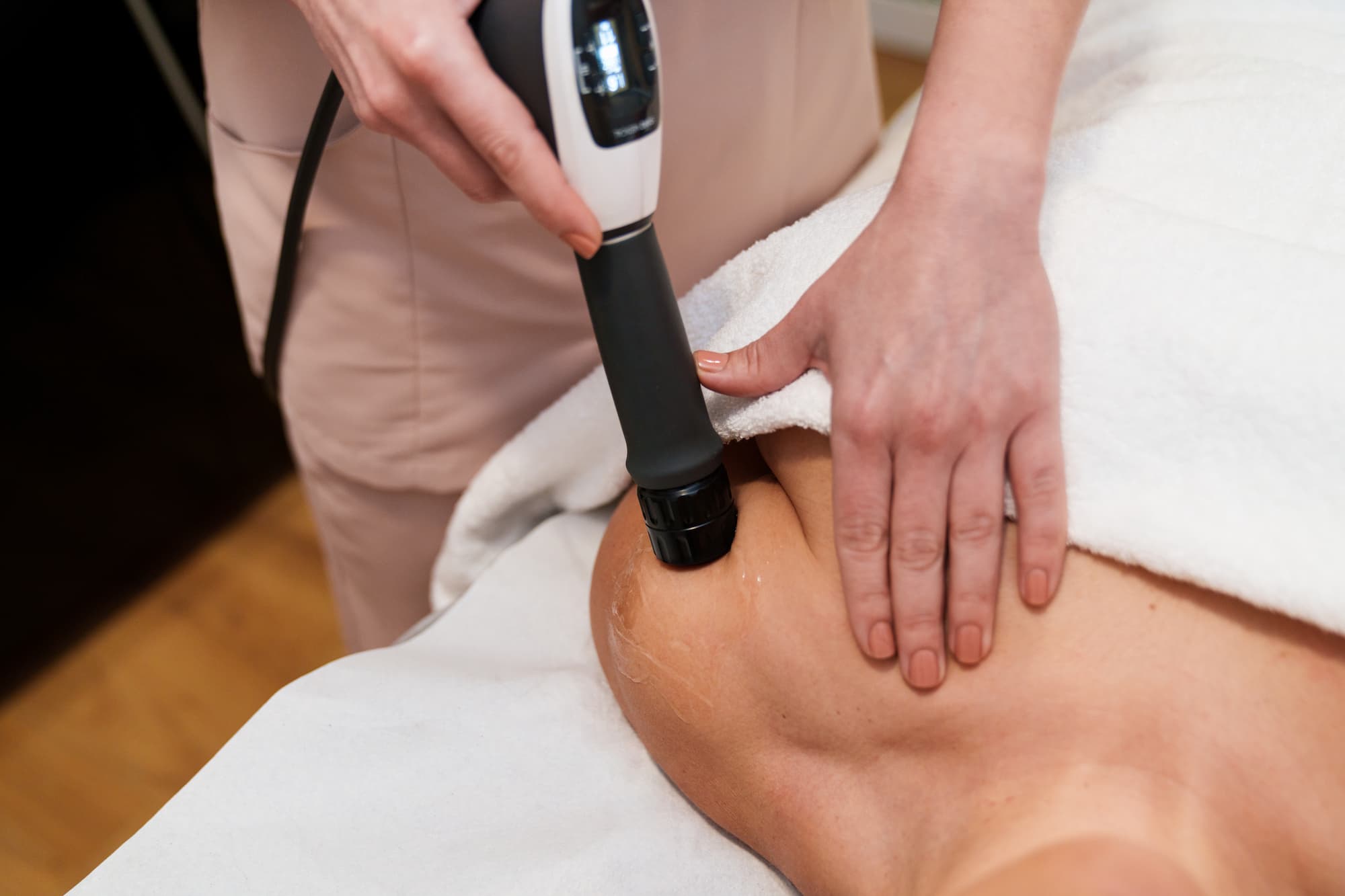
Shockwave therapy has a narrower, more specific role. It’s most effective when tissue has become chronically inflamed, calcified, or “stuck” in a healing cycle it can’t break out of on its own. It doesn’t replace the rehabilitation process, it helps restart it in the areas where conventional treatment has hit a wall.
Signs That Traditional Physiotherapy Is the Right Starting Point
Your injury or pain is relatively recent
If you’ve been dealing with something for a few weeks or less, your tissue is still in an active healing phase. What it needs is proper load management, hands-on therapy, and a structured rehabilitation plan not acoustic wave stimulation. Starting physiotherapy early gives your body the best environment to heal correctly and reduces the risk of the injury becoming chronic.
Your condition affects how you move day-to-day
Pain that changes how you walk, sit, lift, or sleep usually points to a movement or functional problem that needs to be addressed at the root. Physiotherapy looks at the full picture not just the painful spot, but what’s contributing to it. That might mean working on hip strength for knee pain, or addressing posture for recurring shoulder issues.
You’re recovering from surgery or a significant accident
Post-surgical rehabilitation and recovery from motor vehicle or work-related injuries require a carefully staged, progressive approach. At Revibe, we work with patients through ICBC claims and WCB cases to ensure recovery is both clinically sound and properly documented.
You haven’t yet tried structured rehabilitation
If your response to pain has mostly been rest, painkillers, or occasional massage, you likely haven’t gone through a proper physiotherapy program yet. That’s usually the right first step and it resolves a lot more than people expect.
Signs That Shockwave Therapy Might Be Worth Adding to Your Plan
You’ve been at it for months and progress has stalled
This is the most common scenario where shockwave therapy starts to make sense. You’ve been doing your exercises, you’ve had manual therapy, but a specific area, a tendon, a heel, an elbow just isn’t responding the way everything else is. That plateau is often a sign that the tissue itself needs a different kind of stimulus to move forward.
The pain keeps coming back in exactly the same spot
Recurring pain in a precise location, especially around a tendon or fascial attachment point, often indicates a chronic soft tissue problem that has failed to fully heal. Shockwave therapy works by stimulating the biological repair process in that tissue, improving circulation, breaking down calcification, and triggering cellular activity that the body stopped sustaining on its own.
You’ve been told it’s tendinopathy, plantar fasciitis, or a similar diagnosis
These conditions including Achilles tendinopathy, patellar tendinopathy (jumper’s knee), tennis elbow, and rotator cuff tendinitis are among the most studied indications for shockwave treatment. They’re also among the most frustrating to live with, because they can linger for months without the right intervention.
You want a non-invasive option before considering injections or surgery
If you’re at the point where someone has suggested a cortisone injection or a surgical consult, shockwave therapy is worth discussing first. It’s non-invasive, requires no anesthesia, and has a strong evidence base for the conditions it’s designed to treat.
Why Combining Both Usually Gets Better Results
At Revibe Physio & Rehab, shockwave therapy is never a standalone treatment. It’s integrated into your physiotherapy plan when our assessment shows it’s clinically appropriate not offered as an add-on or upsell.
The reason combination works better is straightforward: shockwave therapy addresses the tissue condition, but it doesn’t rebuild the strength, movement patterns, or load tolerance that got compromised while you were in pain. That’s what the physiotherapy component is for. One without the other tends to produce shorter-lasting results.
A Few Honest Things Worth Knowing Before You Decide
Shockwave therapy is effective for specific conditions, but it’s not a universal fix. It works best when the right diagnosis has been confirmed and the treatment is applied to the right tissue. This is why at Revibe, every patient receives a proper clinical assessment before shockwave therapy is recommended because applying it to the wrong structure won’t help, and a good physiotherapist will tell you that directly.
Traditional physiotherapy also isn’t a passive experience. The patients who get the most out of it are the ones who show up consistently, do their home exercises, and communicate openly about what’s working and what isn’t. Recovery is collaborative.
If you’re unsure where you fall, that’s exactly what an initial assessment is for.