
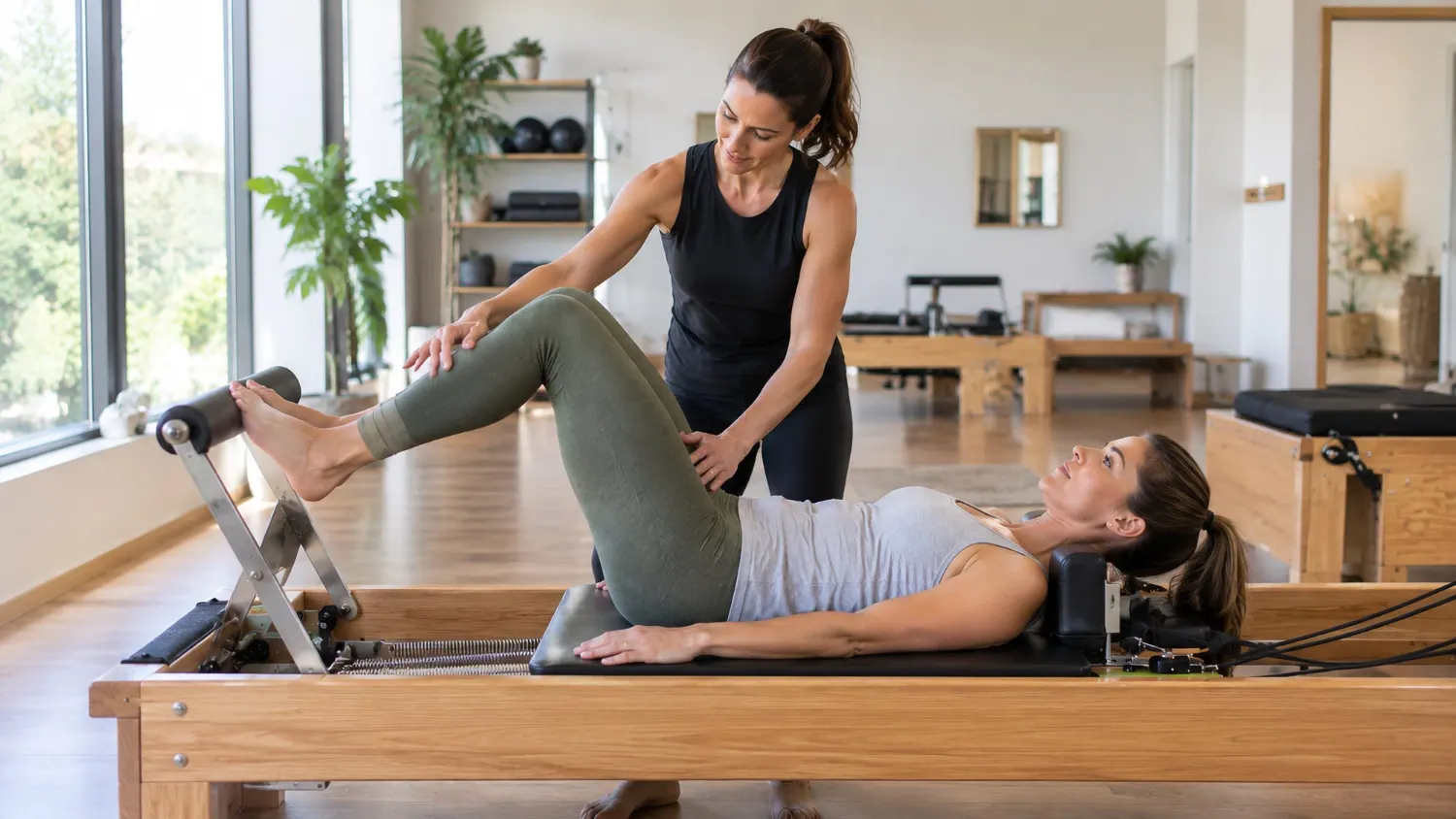
Your first clinical pilates session at Revibe Physio & Rehab starts with you: what you want to do more comfortably, where movement feels difficult, and what kind of guidance you need. We use that conversation and a movement assessment to build a starting point for your one-on-one program.
You do not need Pilates experience. Our physiotherapists lead clinical pilates sessions and tailor the exercises to your movement, symptoms, and goals. Here is how to prepare and what happens as you get started.
Before Your Appointment
Think about the activities you want to work toward. That could be returning to exercise after an injury, improving everyday strength, moving with more confidence, or addressing a recurring movement difficulty. A clear goal helps us connect the exercises to something useful in your life.
Bring relevant details about an injury, surgery, or health concern, along with any questions about exercise. It helps to notice which movements feel uncomfortable and whether anything makes your symptoms better or worse. The American Physical Therapy Association’s first-visit guide also recommends sharing your health history and related reports with the clinician assessing you.
There is no workout to complete before you arrive. We establish your starting point together at the appointment.
1. We Discuss Your Health History and Goals
We begin by learning why you booked clinical pilates and how your current movement affects your day. Tell us what you can do comfortably, what feels limited, and what you want to change. Your goal can be specific, such as returning to a sport, or practical, such as feeling stronger when lifting and carrying.
This conversation gives us context for your exercise plan. Someone rebuilding strength after rehabilitation needs a different starting point from someone seeking guided movement for general mobility. We also ask about relevant injuries, surgery, pain, and other health concerns so we can select an approach that fits you.
Be candid about anything that worries you. If a particular movement has caused discomfort in the past, we want to know before you try it again.
2. We Assess How You Move
Next, we look at movements relevant to your goals. Our clinical pilates program is personalized after a movement assessment. We observe how you move and identify where you have control, where movement feels limited, and which exercises need adjustment.
The assessment is not a fitness test. You are not expected to complete every movement or perform it perfectly. For example, if standing on one leg feels unsteady or bending is uncomfortable, that information helps us choose a more useful starting exercise.
Tell us what you feel as you move. Your feedback matters as much as what we observe. We use it to adjust the position, difficulty, or direction of an exercise rather than asking you to push through pain.
3. We Introduce Exercises Chosen for You
Once we understand your starting point, we guide you through exercises selected for your assessment. We show you how to set up each movement, coach your technique, and check how it feels. You can ask what an exercise works on and how it connects with your goal.
Our clinical pilates sessions are strictly one-on-one. That means we can focus on the details that matter to you instead of moving through a preset class sequence. We adjust an exercise during the session when its range, position, or level of difficulty does not suit your current ability.
The aim of the first session is to learn how you move and begin an appropriate program. You do not need to complete a hard workout to make the appointment worthwhile. Understanding an exercise and performing it with control is a useful first step.
4. We Adapt Exercises and Equipment to Your Needs
You do not need experience with Pilates equipment. Our clinical pilates service page explains that equipment can be part of a session, but the focus stays on your individualized program. We select the exercises and tools that serve your assessment and goals.
Modifications are a normal part of clinical pilates. We can change your starting position, shorten a movement, or adjust its challenge while keeping the purpose of the exercise clear. If you feel discomfort or struggle to control a movement, tell us. We will review it with you and choose the next step.
That attention is useful whether you are returning after an injury or simply want direct guidance with your technique. Your program develops from what you can do now, with progression based on how you respond.
5. We Explain Your Next Steps
Before you leave, we discuss what we observed, the movements you started with, and how they connect to your goals. We explain the direction of your program and answer questions about continuing your sessions.
The right session frequency depends on your assessment, goals, and other care you receive. If we recommend exercises between visits, we will explain how to practise them and what to do if a movement aggravates your symptoms. Let us know about any changes so we can review the plan with you.
clinical pilates can also fit within a broader rehabilitation program. For help deciding whether this approach suits your goals, read our article on who can benefit from clinical pilates in Vancouver.
What Should You Wear and Bring
Wear comfortable clothes that allow you to move freely. Bring relevant health information, any questions you want answered, and details about the activities you are trying to return to. If you have a report related to a recent injury or surgery and are unsure whether to bring it, contact us before the appointment.
Your first visit is the beginning of an individualized plan. You can arrive without Pilates experience and expect guidance based on your own movement rather than a class routine.
Start Clinical Pilates in South Vancouver
At Revibe Physio & Rehab, we offer one-on-one, physiotherapist-led clinical pilates at 6685 Fraser Street in Vancouver. We start by listening to your goals, assessing your movement, and selecting exercises that fit your starting point.
Book your clinical pilates appointment to begin with a program built around you.