Pelvic Floor Exercises for Bladder Control: 5 Moves to Try
Leaking urine when you cough, lift, or exercise can make ordinary activities feel unpredictable. Pelvic floor exercises for bladder control give you a way to practise muscle awareness, contraction, and relaxation. The challenge is knowing which exercises fit your symptoms and whether you are using the right muscles.
At Revibe Physio & Rehab, we assess pelvic floor function and build a plan around your symptoms and goals. The five options below are starting points for understanding different kinds of movement, not a five-step prescription for everyone. We draw on Canadian patient education and adapt each exercise to the person and the symptoms we assess.
How Does the Pelvic Floor Support Bladder Control
The pelvic floor is a group of muscles at the base of the pelvis. These muscles support the bladder and help control when urine is released. They also need to relax so you can empty your bladder. Good function involves strength, timing, and the ability to let go fully after a contraction.
Leakage does not always mean that these muscles simply need more squeezing. Some people leak during a cough or a jump, while others notice a sudden urge to urinate. Pain, difficulty emptying, and a feeling of constant tightness point to different concerns.
Our pelvic floor physiotherapy in Vancouver starts with an assessment of your symptoms, history, breathing, and muscle coordination so we can choose an appropriate approach.
Five Ways to Practise Pelvic Floor Control
Start gently and breathe normally. A contraction should feel like a lift and squeeze around the openings you use to control urine or gas, followed by a complete release. It should not feel like pushing down. These five movements practise different aspects of control; you do not need to do all five as one routine.
1. Relaxed Breathing and Release
Sit comfortably or lie on your back with your knees supported. Let your shoulders, belly, and buttocks soften. Breathe in gently and notice the area around the pelvic floor relax. Breathe out without forcing a squeeze or bearing down. Take several easy breaths and focus on allowing the muscles to rest.
This is a release exercise, not a strengthening set. It helps you notice whether you can relax between contractions. Pelvic Health Solutions’ guide to deep breathing explains how gentle breathing and pelvic floor movement work together. If breathing into this area causes pain or pressure, stop and discuss it with a clinician.
2. Gentle Lift While Lying Down
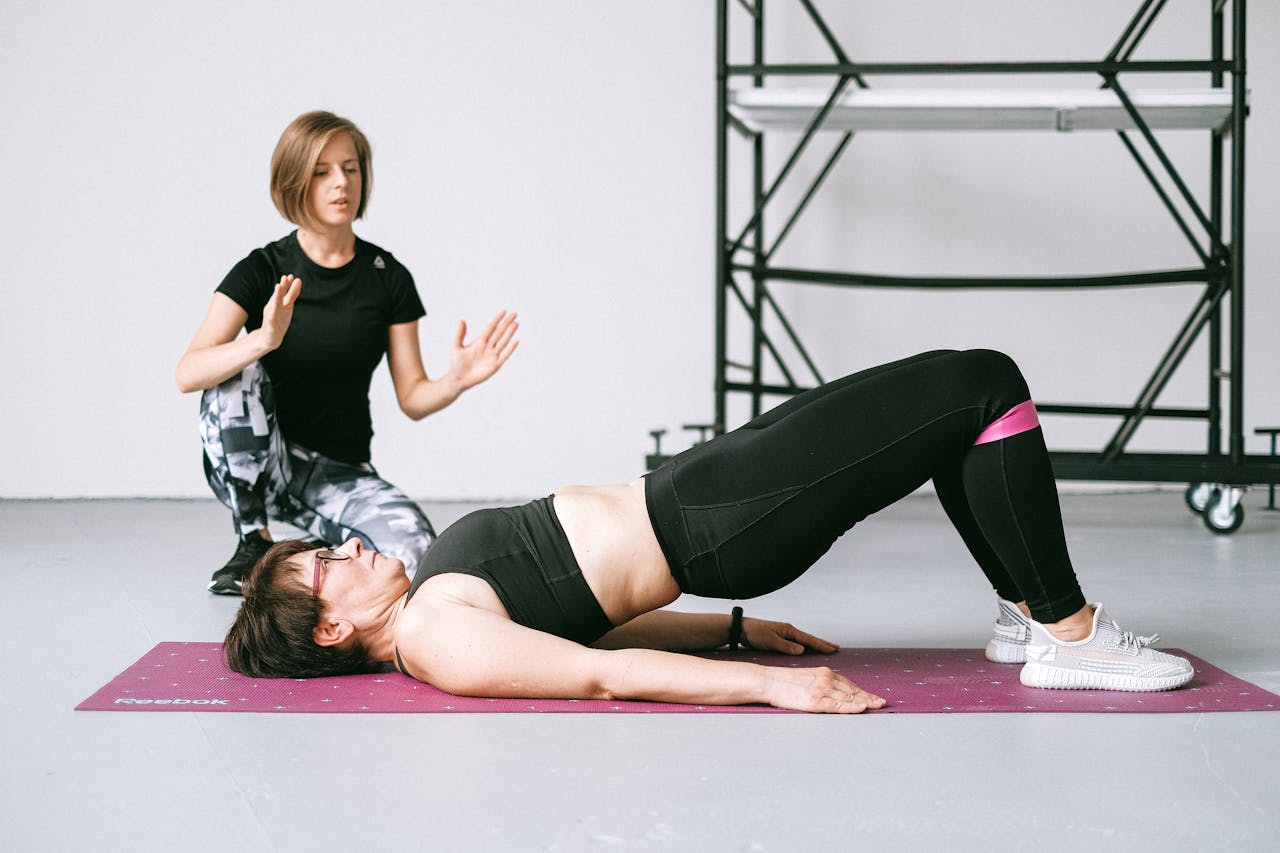
Lie on your back with your knees bent and feet resting on the bed or floor. Breathe normally. Gently lift and squeeze the pelvic floor as though you are trying to stop passing gas, without clenching your buttocks or thighs. Hold only while you can breathe comfortably, then release the muscles completely before trying again.
Lying down provides a supported starting position. University Health Network’s bladder-control guide describes practising pelvic floor contractions while lying, sitting, or standing, with a release between efforts. If you cannot feel a lift, we can help you identify the movement at an assessment rather than asking you to squeeze harder.
3. Short Lifts While Sitting
Sit upright with your feet supported. Gently lift the pelvic floor, release it fully, and pause before another lift. Keep your breathing steady and your stomach, thighs, and buttocks relaxed. The focus is a clear lift followed by a clear release, not the fastest possible repetition.
This variation practises a quicker response in an everyday position. If the muscles do not relax between attempts, return to the breathing exercise instead of adding more contractions. We use your assessment to decide whether short lifts belong in your program and how many to practise.
4. Controlled Lift While Standing
Stand with your feet comfortably apart and your weight balanced. Breathe in, then gently lift your pelvic floor as you breathe out. Release fully before repeating. Stand near a stable surface if balance is a concern.
Standing changes the demands on the muscles. It connects the lift to a position you use during walking, carrying, and other daily activities. Begin only when you can find both the lift and the release comfortably. There is no need to progress to standing contractions simply because they appear later in this list.
5. The Knack Before a Cough or Lift
When you know a cough or sneeze is coming, gently lift your pelvic floor just beforehand. Breathe normally through the movement, then let the muscles relax afterward. You can practise the same timing before an everyday action that triggers leakage, such as picking up a light object.
This timing strategy is called the Knack. The Canadian pelvic health educators at Pelvic Health Solutions describe using it before a cough, sneeze, or another action associated with leakage. It does not replace an assessment of persistent symptoms or the rest of an individualized treatment plan.
Common Mistakes to Avoid
More contractions are not automatically better. Holding your breath, clenching your buttocks, pushing down, or continuing when the muscles cannot relax can make practice unhelpful. Do not routinely stop your urine stream to exercise.
Avoid treating all urinary leakage as a reason to do more Kegels. Pelvic pain, a feeling of heaviness, trouble starting urine flow, or difficulty releasing after a squeeze calls for an individual assessment. Our guide to signs that pelvic floor physiotherapy could help cover other reasons to seek support.
When Should You Stop and Get Help
Stop an exercise if it causes pain, worsening pressure, or increased symptoms. Book an assessment if leakage persists, you cannot identify or relax the muscles, or you are unsure which bladder control exercises suit you. Our registered physiotherapists assess how your pelvic floor is working in relation to your symptoms and guide exercises, breathing, and progression accordingly.
Seek medical care for blood in your urine, burning during urination, fever, or new difficulty passing urine rather than treating those symptoms with exercises.
For individualized guidance, book an appointment at our South Vancouver clinic. We will help you understand your pelvic floor function and build a plan that fits your body and your goals.